SciShow Kids on YouTube: Early-Elementary Science That Fits Your Family (and How to Watch Safely)
FamilyTube channel guide #7
If you want science on YouTube for early-elementary learners — short explainers tied to classroom standards, not random “wow” clips — SciShow Kids is a channel parents often whitelist next to phonics and maths picks.
This is SciShow Kids (@SciShowKids), from the team behind SciShow. It is not the main SciShow channel and not Crash Course Kids. The channel’s own About text says it is ideal for early-elementary learners, Grades 1–3, and that most episodes follow NGSS (Next Generation Science Standards). New episodes continue to be posted on YouTube.
Host Jessi, robot rat Squeaks, and friends at the Fort appear in the channel’s description — but episodes rotate hosts and guests. This guide focuses on whether the channel fits your family and where to start, not a plot summary of every upload.
- Official channel: youtube.com/@SciShowKids (~1.71M subscribers; 614 videos as of Oct 2026)
- Starter playlist — Amazing Animal Senses! | NGSS Standards Grades 1-3 | SciShow Kids (5 videos): Amazing Animal Senses!
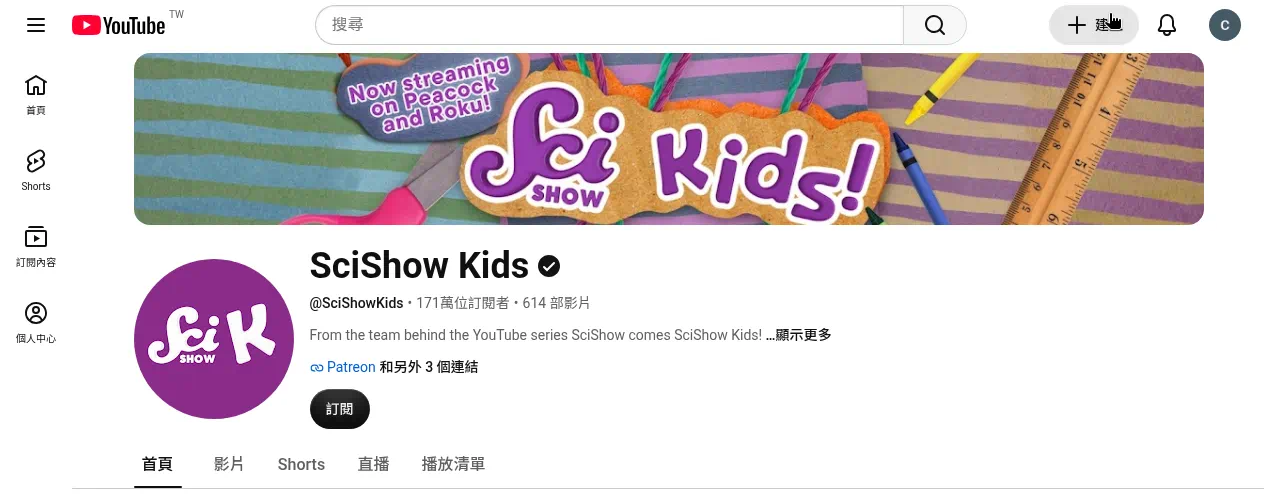
What is SciShow Kids?
SciShow Kids publishes fun, complex science concepts for young, curious minds — usually in roughly four- to five-minute episodes with experiments, questions, and expert chats. The tone is upbeat and educational, aimed at Grades 1–3, not toddlers sitting for passive cartoons.
Unlike a single TV series with one storyline, the channel has 614 videos and many playlists (NGSS-themed sets, compilations, experiments). That is powerful once you know your goal — but it also means no playlist literally says “preschool,” “beginner,” or “starter.” Parents need a short, grade-labeled path instead of importing the whole channel.
For a younger sibling around age 4, some popular topics by title (storms, spiders, sharks, extinction) may feel like “wait until later” picks even when the channel’s core audience is first through third grade. We call those out below — by title only, not as a review of every frame.
Why parents like it for Grades 1–3 science
1. Short episodes that match a school science unit
Many playlists name NGSS grades 1–3. The starter list below opens with First Grade NGSS in its playlist description — a clear signal for “youngest labeled series” on the channel.
2. Real questions, not hype editing
Episodes ask how animal senses work, how eyes see, or how sound bounces — the kind of “why?” questions early-elementary kids actually bring home.
3. A different slot than phonics, maths, or yoga
If Alphablocks is reading and Numberblocks is maths, SciShow Kids is science curiosity in small bites. Pair with Cosmic Kids Yoga when bodies need to move, or Art for Kids Hub when hands need paper time.
4. You choose the whitelist
With 614 uploads, newcomers should not add the whole library at once. FamilyTube keeps only the episodes a parent approves.
My take as a twin dad
I treat SciShow Kids as “one good question per sitting” screen time — especially when one twin is in first grade and the other still listens along.
We do not start from the channel’s “most popular” sort. Those hits skew toward weather, sharks, and dinosaurs — fine later, but a lot for a four-year-old’s first week. Instead we use a five-video NGSS playlist and only approve three for week one.
The catch is still YouTube: comments, suggested videos, and “one more” can pull kids into compilations or topics you did not preview. That is why our SciShow Kids picks live in a short FamilyTube list — not the open app feed.
The catch: great science ≠ safe YouTube feed
Even wholesome educational channels sit inside YouTube's recommendation and autoplay system. Comments, suggested videos, and "one more" can still pull kids sideways — including long compilations or popular topics you did not choose.
That is the gap FamilyTube is built for:
Kids only watch parent-approved YouTube videos.
No recommendation feed. No endless scrolling. No surprise next video.
You keep the science episodes you chose. You drop the algorithm.
FamilyTube only keeps the videos you approve — not every upload the channel has ever posted.
Where to start: Amazing Animal Senses (not the whole playlist order)
The channel has no playlist titled preschool, little kids, beginner, or starter. Among short, grade-labeled lists, Amazing Animal Senses! | NGSS Standards Grades 1-3 | SciShow Kids is a practical bookmark: five videos, each about four to five minutes, and a description that leads with First Grade NGSS.
Do not treat “first three playlist entries” as three starters. Items 3 and 5 (sharks and snakes) stay on the playlist but are not our first-week picks. We start with whiskers, bats, and insect eyes — in that order.
- Playlist: https://www.youtube.com/playlist?list=PLw2cuKNQvZ2c1A6ZcwF-o3_hi-fiSZkRG
- Channel: https://www.youtube.com/@SciShowKids
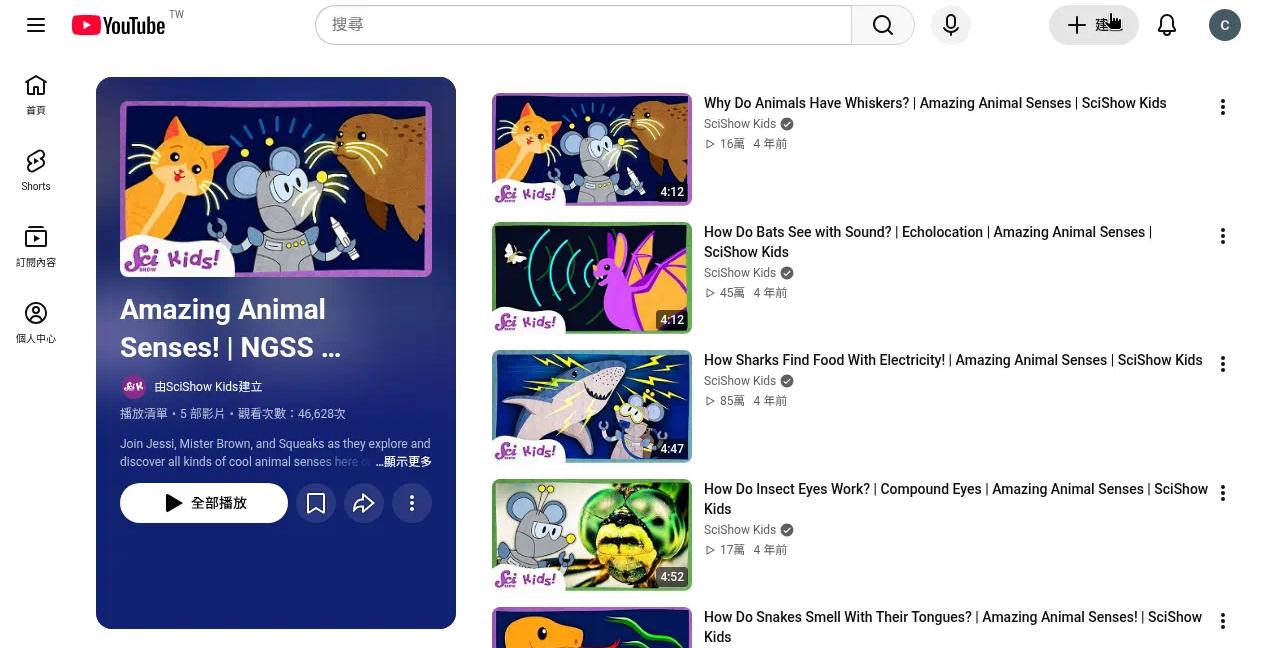
First-week starters (three episodes)
-
Why Do Animals Have Whiskers? | Amazing Animal Senses | SciShow Kids (4:12) — watch on YouTube
-
How Do Bats See with Sound? | Echolocation | Amazing Animal Senses | SciShow Kids (4:12) — watch on YouTube
-
How Do Insect Eyes Work? | Compound Eyes | Amazing Animal Senses | SciShow Kids (4:52) — watch on YouTube
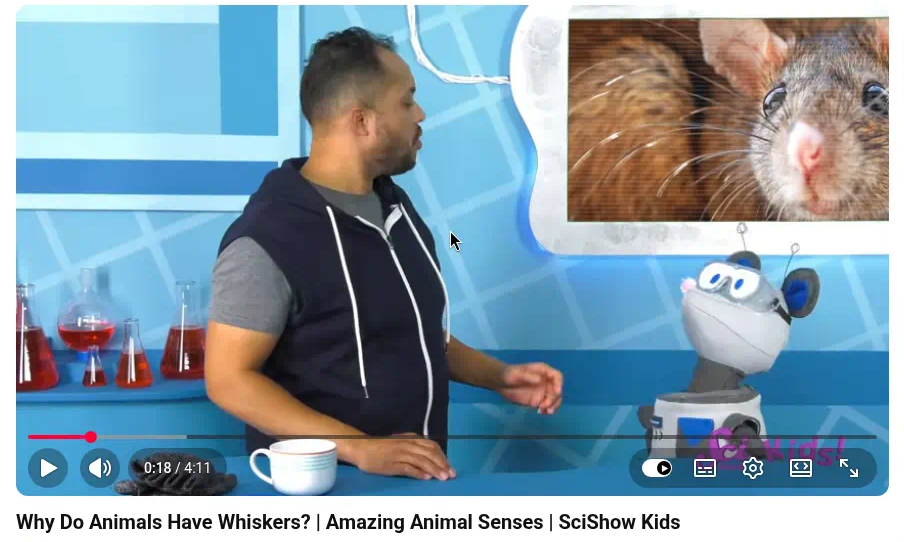
Why Do Animals Have Whiskers? — a host with robot rat Squeaks and a close-up of a real rat’s whiskers; not a predation scene.
The whiskers episode shows a host, Squeaks, and a close-up of a real rat’s whiskers — a senses lesson, not a hunting scene. The video description names Squeaks and Mister Brown (Anthony Brown); the adult in this frame is Mister Brown, not Jessi.
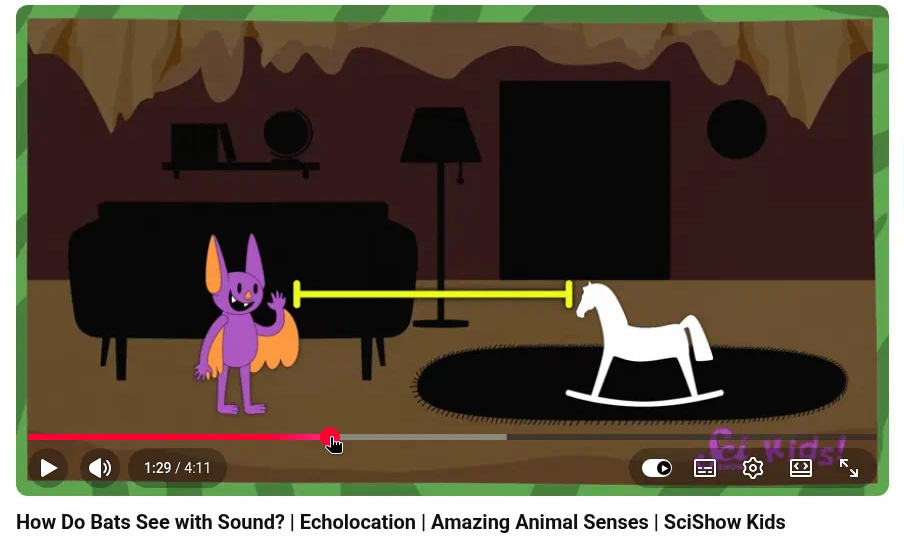
The bats episode uses a cartoon bat and yellow lines hitting a rocking horse — an echolocation diagram, not an attack scene. If your child is afraid of bats, skip this one and keep whiskers plus insect eyes for now.
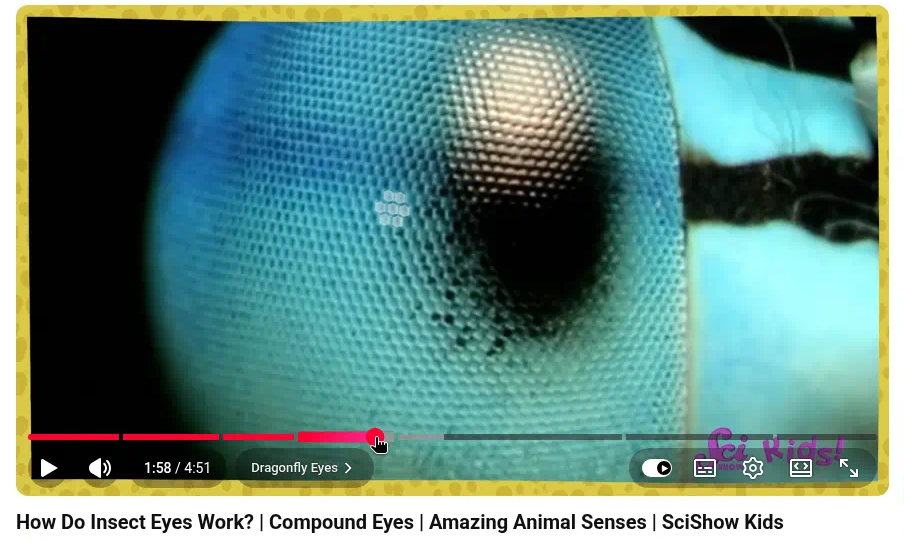
The insect-eyes episode is a close-up of a dragonfly’s compound eye (chapter Dragonfly Eyes). Some children find macro eye shots uncomfortable — preview first or save it for when your child likes bug close-ups. No host appears in this screenshot frame.
On the same playlist, but not week one
These two stay in Amazing Animal Senses! for later — we did not use them as first-week starters:
- How Sharks Find Food With Electricity! | Amazing Animal Senses | SciShow Kids — watch on YouTube
- How Do Snakes Smell With Their Tongues? | Amazing Animal Senses! | SciShow Kids — watch on YouTube
Add them one by one in FamilyTube when you are ready — not as day-one defaults.
Popular hits you may want to wait on (about age 4)
These eight titles come from the channel’s Most popular sort on 2026-10-05. We did not watch the footage; judgment is by title only. If you have a younger sibling around four, you may prefer to wait until storms, spiders, sharks, or extinction feel like a good fit — even though the channel targets Grades 1–3.
| Title | Views (approx.) | Link |
|---|---|---|
| What is a Tornado? | about 8.91 million | YouTube |
| Blobfish: The World's Ugliest Animal | about 6.36 million | YouTube |
| What Causes Thunder and Lightning? | about 5.62 million | YouTube |
| Don't Be Afraid of Spiders! | about 5.60 million | YouTube |
| Sea Monsters Of The Past | about 5.48 million | YouTube |
| Super Sharks! | about 4.94 million | YouTube |
| What's a Hurricane? | about 3.58 million | YouTube |
| What Happened to the Dinosaurs? | about 2.20 million | YouTube |
That is not a ban list — just a parent filter so “most popular” does not become your toddler’s automatic queue.
How to watch SciShow Kids safely in FamilyTube
- Open FamilyTube (parent mode).
- Search for SciShow Kids, paste a YouTube link, or share from the YouTube app.
- Add the three starter episodes above first — then sharks, snakes, or popular hits only when you approve them.
- Turn on Child Mode.
- Hand over the iPad knowing the next video cannot wander into mystery recommendations.
Result: your child can enjoy early-elementary science — and only what you approved.
Quick FAQ
Is SciShow Kids for toddlers or preschoolers?
The channel’s own text targets early-elementary learners, Grades 1–3. Younger siblings may listen along, but this guide is not an ages 1–6 toddler channel pick.
Is this the main SciShow or Crash Course Kids?
No. This guide is only for SciShow Kids (@SciShowKids).
Which playlist should we start with?
Amazing Animal Senses! | NGSS Standards Grades 1-3 — then approve three episodes (whiskers, bats, insect eyes), not the whole five at once and not the channel’s entire catalog.
Why skip sharks and snakes at first?
They remain on the starter playlist for later. Week one stays with whiskers, bats, and insect eyes so the list feels manageable.
Can I add the whole channel at once?
With 614 videos, that is usually too much. FamilyTube lets you import channels or pick videos one by one; a short NGSS list is calmer.
Does FamilyTube replace YouTube?
No. FamilyTube uses YouTube's player for videos you choose. It removes the open recommendation rabbit hole for your child.
Bottom line
SciShow Kids is a strong pick for early-elementary science on YouTube: NGSS-aligned short episodes, a clear animal senses starter path, and curiosity-driven hosts — distinct from toddler sing-alongs or long compilations.
Start with three approved episodes. Keep the whitelist short. Save “most popular” weather and creature titles for when your child is ready. Watch inside FamilyTube so good science does not get undone by a bad recommendation.
Pair with Numberblocks for early maths, Alphablocks for phonics, Scratch Garden for phonics songs, Cosmic Kids Yoga for movement, Super Simple Songs for calm sing-alongs, or Art for Kids Hub for drawing — or browse all channel guides for more parent-trusted picks.
Free trial on FamilyTube · SciShow Kids on YouTube · All channel guides